
A reflection on the Sistine Chapel, cultural mediation, and how contemporary audiences reconnect with symbolic worlds.
We Do Not Need Simpler Art. We Need New Paths into Meaning
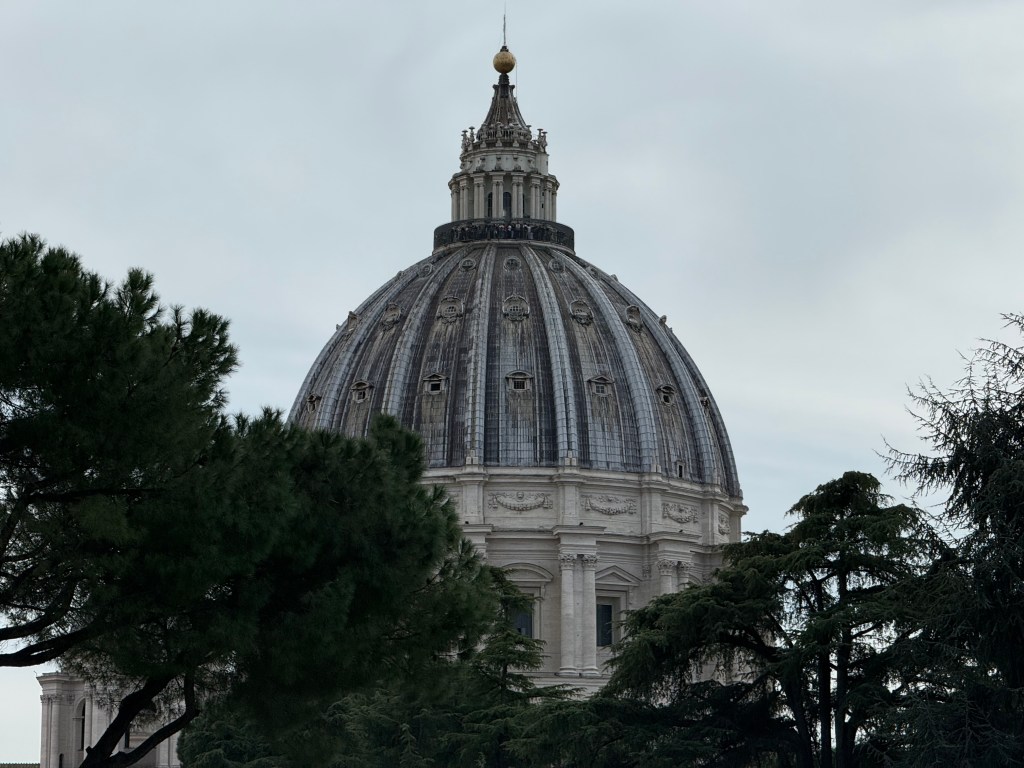
In March, I visited the Sistine Chapel in Vatican City.
As happens in many of the world’s great museums—the Louvre, the Prado, the MET, or the Uffizi—my visit involved long lines, multiple security controls, dense crowds, and a certain sense of disorientation. To make matters more complex, Michelangelo’s Last Judgment fresco was temporarily closed for restoration.
The Sistine Chapel itself is relatively small. Visitors have only a few minutes to stand in the center, raise their gaze, and confront one of the most ambitious visual programs in Western art.
Painted by Michelangelo between 1508 and 1512, the ceiling presents nine scenes from Genesis surrounded by prophets, sibyls, ancestors of Christ, and episodes connected to salvation history.
And yet, for many contemporary visitors, the challenge is not simply seeing.
It is understanding.
Encountering Art Without Access to Meaning
Inside the chapel, photography is forbidden. Conversation is limited. Interpretation is minimal.
At first glance, the experience appears ideal for contemplation.
But contemporary audiences often face two obstacles.
The first is physical: sustained observation requires maintaining an uncomfortable bodily position while looking upward.
The second is interpretive: the symbolic and visual density of the work can make it difficult to construct meaning during a first encounter.
Without the possibility of examining details or receiving interpretive guidance, encountering the Sistine Chapel for the first time can feel strangely disorienting.
A tension emerges between surrendering to the emotional atmosphere of sixteenth-century religious culture and understanding the extraordinary influence of Michelangelo’s visual language.
From my own experience, this makes full immersion difficult.
Art interpretation requires time, attention, and access to certain visual codes.
Why Do Contemporary Audiences Feel Distant from Historical Art?
This reflection took on a new dimension after I learned about Michelangelo’s Sistine Chapel: The Exhibition, a contemporary exhibition format that reproduces the frescoes at large scale outside Vatican City and offers visitors interpretive resources, spatial proximity, and greater freedom to observe.
Although I have not yet experienced the exhibition in person, the proposal itself raised a question that stayed with me:
Can a reproduction create an emotional connection with an artwork originally rooted in a specific place, history, and architecture?
At first glance, the answer may seem obvious. We often assume that original works naturally produce deeper experiences than reproductions. But perhaps the question is more complex.
What if emotional connection does not depend exclusively on authenticity?
What if it also depends on conditions of access?
This question points toward a broader transformation: there seems to be a growing distance between the ways contemporary audiences encounter historical art and the symbolic worlds from which that art emerged.
Why does this happen?
Several possibilities begin to appear.
One explanation may be historical knowledge. Perhaps understanding a work requires familiarity with the people, events, and beliefs that produced it. Yet this raises another question: do we really need to know who Michelangelo was, understand Pope Julius II’s commission, or recognize biblical narratives in order to feel emotionally moved by the Sistine Chapel?
Another possibility concerns visual literacy. Perhaps contemporary audiences have become less accustomed to reading complex visual systems and symbolic narratives. Historical art may not have stopped communicating; perhaps we no longer share the interpretive language necessary to enter into dialogue with it.
There may also be a deeper cultural transformation at play. Many religious images that belonged to a shared symbolic universe in the sixteenth century no longer occupy the same place in contemporary experience. What was once immediately recognizable now often requires mediation.
And perhaps another loss deserves attention: the loss of contemplation.
The ability to slow down, remain with an image, tolerate ambiguity, and allow meaning to emerge gradually.
These questions do not yet lead to a single answer.
But they suggest an initial hypothesis:
The contemporary challenge for museums and cultural institutions may no longer be guaranteeing access to images.
The greater challenge may be facilitating access to meaning.
The Sistine Chapel Is Not Just a Painting
One of the ideas that struck me most is that the Sistine Chapel is not simply a collection of images.
It is architecture.
Narrative.
Theology.
Politics.
History.
Ritual.
Meaning does not reside in each image individually.
It emerges from relationships: between frescoes, space, movement, historical context, and the body of the viewer.
The chapel functions as a symbolic system.
And perhaps this explains why contemporary audiences sometimes struggle to connect deeply with it.
The challenge is not only observing. It is entering the symbolic world the work assumes.
Interpretation as Cultural Mediation
This is where exhibitions become interesting.
Their value may not lie in reproducing images.
Their value may lie in reproducing access.
Closer observation.
Educational support.
Interpretive guidance.
Permission to pause.
Freedom to revisit details.
These conditions transform how meaning is constructed.
Interpretation begins to function as cultural mediation.
Not simplification.
Not explanation.
A bridge.
A way of helping audiences temporarily inhabit the symbolic logic from which a work emerged.
What Is Lost—and What Is Gained?
Something important is inevitably lost.
The original architecture.
The ritual atmosphere.
The silence.
The historical aura of place.
The awareness that these images were conceived for a specific location and experience.
But something is gained too.
Proximity.
Time.
Educational support.
Accessibility.
Participation.
And perhaps this last point deserves attention.
Today, visitors often want more than observation.
They want involvement.
Even acts that may seem superficial—taking photographs, documenting presence—can become contemporary ways of establishing connection and belonging.
Not replacing the artwork.
Participating in its experience.
Conclusion: From Access to Images Toward Access to Meaning
Perhaps experiences such as these reveal something important.
Contemporary audiences are not rejecting historical art.
People continue visiting museums. They continue seeking meaning.
But access to images is no longer enough.
The challenge today may be rebuilding the interpretive bridges that allow audiences to inhabit symbolic worlds that no longer feel immediately familiar.
This does not mean simplifying art. It means creating conditions for encounter.
And perhaps this points toward a question worth continuing to explore:
When people remain silent before historical art, is that silence disinterest— or is it the experience of standing before a symbolic language we no longer fully speak?

 The Lexel Journal