
This week I visited Opus One in Oakville, Napa Valley for the first time.
Visiting this winery allows you to experience an idea physically. Once you leave St. Helena Highway and enter the property, something remarkable happens: without realizing it, you are stepping into the heart of a wine glass.
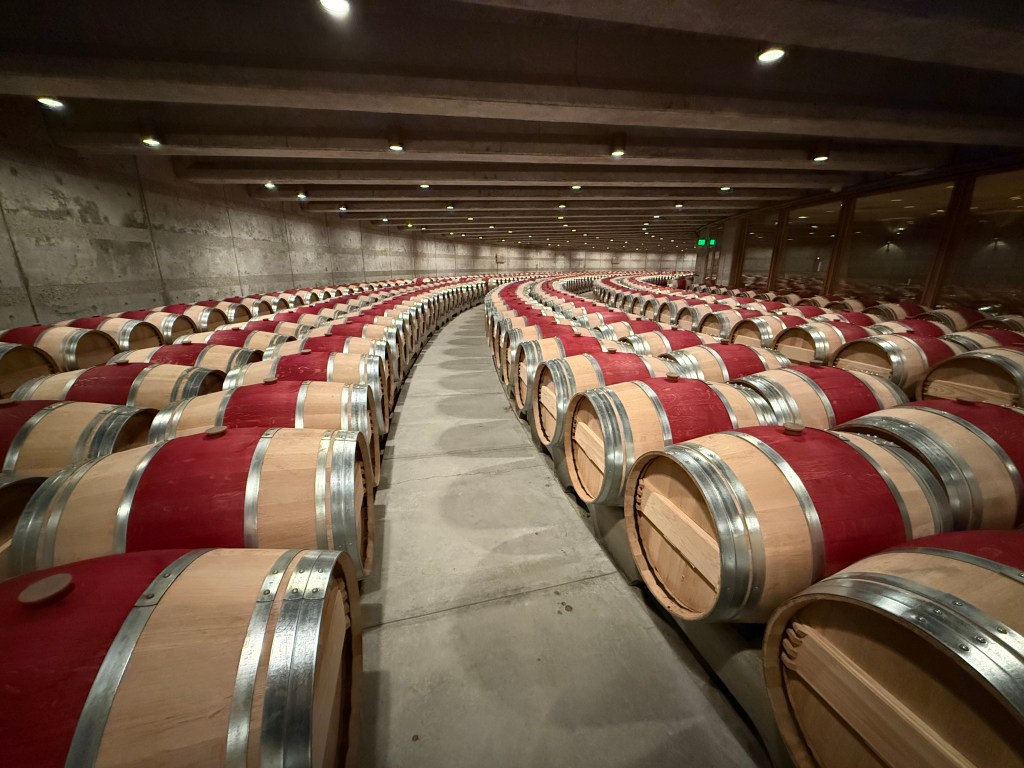
The architecture of the estate was designed so that the entrance road forms the stem of the glass, while the vineyards and winery unfold within the bowl itself. The metaphor is not hidden in a brochure or a marketing campaign—it is embedded in the landscape.
The attention to detail and commitment to excellence associated with this internationally-recognized wine are present at every step: the gardens, the tasting room, the vineyards, and the winery all seem to tell the same story.
Yet this visit led me to a question what goes beyond wine: Why do some places feel emotionally close to us while others remain distant, even when they possess an equally rich history?
The Emotional Distance of Cultural Meaning
Much of my work revolves around a recurring question: Why do certain symbolic systems become emotionally distant to contemporary audiences? And how can interpretation restore that connection?
We encounter this challenge constantly in museums, historical sites, works of art, and cultural traditions. Often we stand before something important, yet fail to connect with it because we do not know the stories, decisions, conflicts, and aspirations that brought it into existence.
My experience at Opus One reminded me that emotional connection rarely comes from the object itself. It emerges when we understand the human vision behind it.
Two Worlds, One Vision
On one side stood Robert Mondavi, convinced that California could produce wines of world-class quality.
On the other stood, Baron Philippe de Rothschild, heir to one of Bordeaux’s most prestigious winemaking traditions.
Their partnership represented more than a business venture. It was a dialogue between two wine cultures: the Old World and the New World.
This vision is captured in the winery’s iconic label, where the profiles of both men merge into a single image.
The label functions as a symbol of the winery’s central idea: two traditions choosing to create a shared identity.
Once we understand this story, the wine becomes more than a beverage. It becomes a cultural narrative.
A Commitment to Clarity
In a time when many brands seek constant diversification, Opus One communicates a different philosophy.
Its focus remains on a single wine.
A wine built primarily around Cabernet Sauvignon grown in Napa Valley, complemented by smaller proportions of Cabernet Franc, Petit Verdot, Merlot, and Malbec.
This decision says something important about the identity of the project: depth over dispersion.
One vision fostered patiently over decades.
Time as Part of the Experience
One of the most fascinating aspects of the visit was the opportunity to participate in a vertical tasting.
Tasting different vintages of the same wine—2012, 2019, and 2022—enables visitors to observe how a single identity remains recognizable while time transforms its expression.
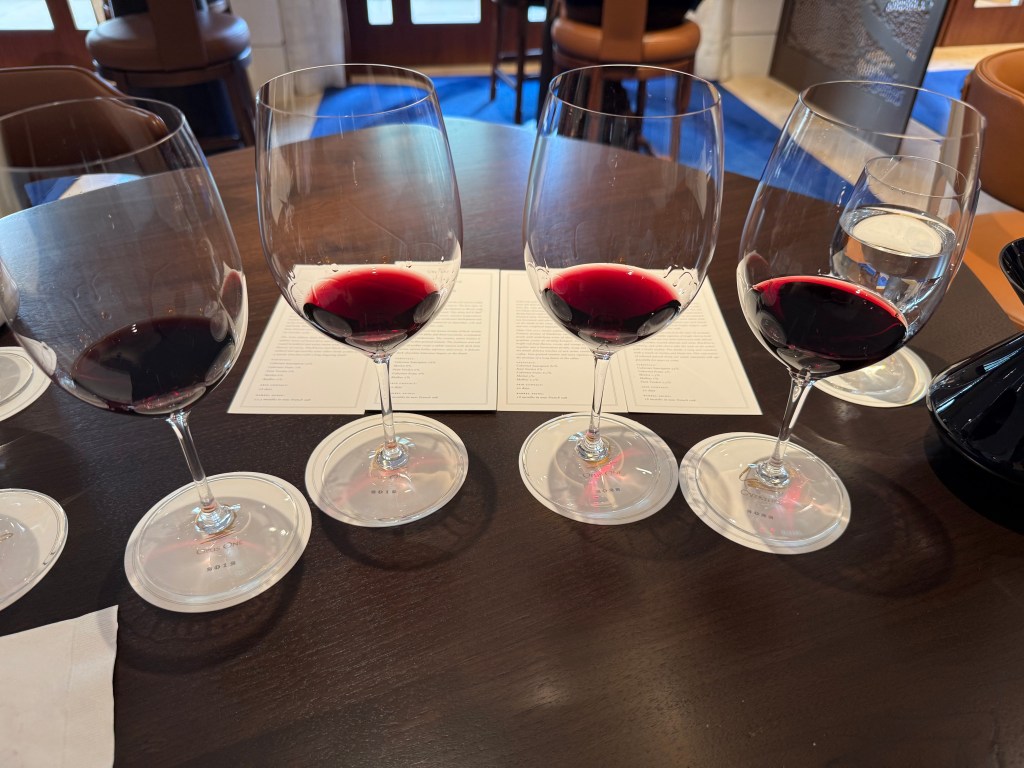
It also offers a unique opportunity to appreciate the influence of terroir: the combination of climatic, geographical, geological, and human factors that shape a wine.
The experience reveals that wine is not simply an agricultural or technical product. It is also a form of memory.
Each vintage preserves traces of a particular moment in time.
What Interpretation Makes Visible
Perhaps the reason Opus One feels emotionally accessible to so many visitors is not only the quality of the wine.
What creates connection is the opportunity to understand the vision behind it.
The architecture, the label, the landscape, the tasting experience, and the founders’ story all function as elements within the same system of meaning.
Interpretation allows us to see those connections.
And once we see them, what was merely a winery becomes the tangible expression of an idea.
A Final Reflection
I am increasingly interested in understanding how people establish emotional connections with cultural expressions from other places, traditions, and historical periods.
Museums, architecture, works of art, cultural landscapes—and even wineries—pose the same question:
What happens when we stop looking only at objects and begin interpreting the stories, values, and human aspirations they contain?
Perhaps emotional distance does not originate in the objects themselves.
Maybe it emerges when symbols lose the bridge that connects them to people.
And perhaps the work of interpretation is, ultimately, the work of rebuilding that bridge.
📝 My research and writing explore how people connect with cultural meaning through art, language, identity, and interpretation. I am particularly interested in why certain symbolic systems become emotionally distant and how interpretation helps restore that connection.
2026, Designed with WordPress

 The Lexel Journal